trafic jam

Wednesday, February 23, 2011

Jakarta Youngster's Creativity and Music Bands


More than a city, Jakarta is a destination encompassing an array of unique and exciting areas. It is the melting point of various ethnic groups in Indonesia. The city is endowed with rich traditional cultural heritage and becomes lively because of its teens’ dynamical lifestyle and creativity. Their extra-school activities and hobbies become an important part of the entertainment business. One of the activities of some youngsters in music arrangements and performance make the music industry flourish.

The musical life in Indonesia has experienced up and down cycles. When musical groups started to establish and develop in the early 1960s, at the same time when the Beatles reached its peak, the musical groups in Indonesia faced a bleak situation as the political life became very intense. It was the period when the Indonesian communist party was in its apogee. Soekarno banned the musical groups which he considered as too westernized. Some of the band members were even put in jail. The musical groups slowly rose again when the Old Order crumpled and life became more warm and open. For the young generation that dark period was just history.  

Indonesia with its 230 million population is obviously a huge market for music records. With such potential buyers, it is not too hard for the talented group to break the commercial limit of 50,000 record sales. For those who gain sales of 100,000 copies are eligible to be awarded a golden trophy and a platinum trophy for 150,000 sales. 

In terms of record sales, market size in Indonesia is estimated at around Rp1 trillion (US$ 110 million) per annum (in 2004). However, because of piracy, legal record album sales were declining sharply at around 20% annually. Recording industry as one of the most important elements of Indonesia's music industry suffered heavy blows. If in 2005 the number of tapes, CDs and VCDs that circulated in Indonesia reached 30 million pieces, then in 2006 the figure had shrunk to 24 million  copies continued to decline in 2007 to reach 19 million pieces and only about 15 million in 2008, and was estimated at as low as  9 million in 2010. 

Although the movement of anti-piracy continued, the piracy remained rampant.  The circulation of pirated products was estimated to reach 90% of the original ones. That is, one official album release, 9 pirated copies have appeared on the market.


Notwithstanding, the progress of technological development and its direct effect on the lower price of the cassette, CD and DVD players make musical bands flourish in Indonesia. The easiness to record the music, the availability of electrical music instruments and the dream to receive wide promotion nationally is the reasons why the establishment of music bands is growing so fast. 

Today there are around 166 professional music groups in Indonesia the majority of which having the domicile in Jakarta. Some music groups evolve from street singers who are used to performing their singing in the crowded sidewalks and sometimes illegally in the buses and commuter train. Due to their mobility, their instruments are usually simple consisting of guitar and banjo.

As they grow up, they become “Indie” music groups with more complete and sophisticated instruments. As their financial capability is relatively weak, they do everything themselves including recording, promotion, marketing, sales, and book-keeping. Indie music groups are numerous, there are around 1,200 in Jakarta alone, around 1,000 in Yogyakarta and Central Java,  not to mention in other cities in Indonesia.
 
Usually, they start by imitating the songs of famous music bands and step by step they composed their own songs. In music term, independent music, often shortened to indie music or "indie", is used to describe an autonomous group, independence from major commercial record labels or their subsidiaries,  an approach of "do-it-yourself" to music recording and publishing. 

Then, at the top level, there are professional groups which are financially powerful enough that they can hire band management which handles two or more music groups. As they grow stronger, they would become management band capable of hiring their own managers and book-keepers.

The professional and indie music groups develop well and are in a complementary position. There is probably no difference in talents of both group members but their fate depends on the public acceptance and opportunities to perform music on special occasions. 

The music audiences today are more segmented due to the increasing number of music bands with their own specialties including heavy metal, thrash metal, reggae, pop, new wave, high octane rock and last but not least the semi-traditional "dangdut" and some other ones. 

Most of the newcomers have to sign their working contracts with the giant musical recorders which in turn handle their promotion, recordings, merchandise or market their albums through internet, TV programs and radio which air musical performances of the newcomers.

Another activity such as the TV program like “Indonesia Mencari Bakat” (Searching for Talented Persons) aired by TV channels is able to find talented young people as singers and vocal groups enabling them to develop their abilities and allow them to enter the music studio recording.  Another TV program of Indonesian Idol, resembling the American Idol program, for a few years was able to grab talented singers which were finally hired by the recording companies or they joined with other group bands in Jakarta. 


Sunday, January 30, 2011

The Power of Motorcycles

Jakarta citizens are highly mobile due to their daily working schedules and business activities as well as social and other non-routine activities.  Their mobility is supported by 7,5 million motorcycles of various kinds and more than 2 millions of cars, not to mention around 800,000 of public transportation of various kinds (300,000 buses and 500,000 other kinds of vehicles).

Considering the population in Greater Jakarta which is 20 million (9,5 million in the Metropolitan), the use of motorcycle excluding those having private cars is 1 : 3 in Jakarta. Recently, a total of 53 million units of motorcycles had been manufactured in Indonesia, of which as many as 50 million units were in circulation on the streets. Considering the population of Indonesia are 230 million, the use of motorcycles per capita in Indonesia was around 1: 5.

With such proportion, the sales of new motorcycles in Jakarta are still high, more than 3,000 motorcycles are sold per day. This is because of an easy purchasing pattern based on credit-backed multi-financing which eventually enhance the people’s purchasing-power for these two-wheeled vehicles. With a down payment of only Rp 500 thousand, one can directly bring home the vehicle worth of more than Rp 10 million. 

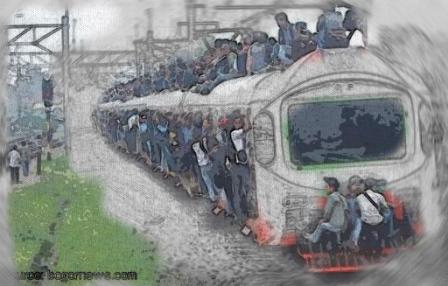
With such kind of financing and the capability of the motorcycle industry to produce powerful, efficient (fuel consumption of around 40 kilometers per liter)  and relatively cheap transportation mode, more people prefer to use motorcycles rather than public transportation.  And here lies the problem. The more frequent the traffic jams, the more people try to use motorcycles instead of public transport causing more traffic jam. The travel of the motorcycles is now amounted to around 20 million trips per day.

Notwithstanding, hardly anybody is aware of the significant roles of motorcycles in the economic growth of the country. The authority overlooks the motorcycle role in increasing tremendously the mobility of the people to turn the business environment.  Indonesia doesn't need to catch up with the developed countries to increase significantly the number of cars per capita in order to stimulate economic activities. In term of people mobility,  as the country has  50 million motorcycles in addition to 10 million cars, their economic power is equivalent to the developed countries having 60 million cars (assuming that one car has two passengers). 

The eagerness of using the motorcycles by middle and lower classes helps the country to shortcut the way towards the acceleration of its economic development. This is really a revolution through the transportation sector in Indonesia as one way to catch up with the economics of developed countries.

The mobility of the motorcyclists shifts the location of new houses needed from the city into the suburbs up to around sixty kilometers out of the city which enlarges the area of Greater Jakarta today. Their mobility also helps to create good business activities and the environment as well as stimulates domestic tourist developments such as the establishment of new restaurants and new attractions especially in the surrounding areas having a special interest or good panorama.  

Jakarta's infrastructure seems not ready to support such high growth of motorcycle usage. Currently, the total number of vehicles and a total length of roads which is around 7,650 kilometers in Jakarta are far from proportional. The road length extension is below 1% whereas the growth of car and motorcycles users is more than 6% annually.


The government should think more about providing the infrastructure for motorcycles, as they are relatively easy, inexpensive and efficient than cars. The regulators’ mindset should be changed. Banning or restricting motorcyclists crossing some protocol roads are counterproductive. The authorities should not regard the motorcycles solely as the source of the traffic jam but also as the power of the economic enhancement of the country. 

The government should look for the way out of how the motorcyclists can more easily and safely travel across the city. They should be protected as far as possible from the fatal accident which may happen to them in riding between the vehicles through a very narrow escape between them. Every day at least three lives have lost due to road traffic accidents, about two of them are motorcyclists.

The traffic problem can be more easily reduced if adequate and safer, convenient, affordable, more integrated and timely public transportation is available. However, to develop such public transportation is not an easy task. It is far more inexpensive to change and educate the mentality of the motorcyclists for mutual respect, mutual care, obeying the rules, and throwing away the shortcut mentality. This effort should be continuously done by the entire community, reverberated by the rule of law firmly and consistently imposed by the related authorities.

Wednesday, January 12, 2011

Jakarta Busway: A Success Story?

The turn of the year was marked by the opening of two busway corridors extending the coverage of the city transport to the southeast-northwest Jakarta corners and the south-north axis of the eastern parts of Jakarta.

This event was relatively significant as the operation of these corridors (9 and 10) make the Jakarta citizens easily move around the city only with Rp3,500 (40 cents US$) through the connection with the existing busway networks. The passengers can even spend less (Rp2,000) as long as they travel before 07.00 am.

The idea to operate busway was initiated in 1997 inspired by Bogota busway in Colombia as an exemplary model. In this system, the bus was given an exclusive lane on the roads that are part of the busway route. Transjakarta started operations in the early of 2004 to provide faster, convenient, yet affordable transportation means for the Jakarta citizens.

There were skeptical attitude and opposition against the introduction of busway as an alternative public transport in Jakarta. A new idea always gets opposition from a part of the society especially those who are skeptical. You may remember how the similar skeptical attitude rose when the police department issued the rule mandating motorcyclists to wear helmets in the early 1980s. Kompas described the people discontentment against such rule through a caricature depicting a motorcyclist bearing a rice basket upside down on his head in order to observe the rule.

But the reluctance toward the introduction of busway was not without reason. Most of Jakarta roads are narrow clogged with cars and would be even worse if they are reduced by the busway lanes. Actually, there are several problems the operators have to solve, among others the lack of buses during the peak hours, lack of AC in some bus shelters, CNG usage as busway fuel, and the external problem such as private cars flocking the lanes.

There are a total of 97 kilometers of busway lanes and 120 bus shelters built along the lanes. As many as 270 single and 16 double-buses are in operation carrying around 250,000 passengers daily. From those figures, some of them are from motorcyclists and car owners who regularly shift using the busway keeping their vehicles at home.


With the aim to improve the service and to cut down the subsidy, in 2007 the city government, supported by local House members, planned to double the tariff to Rp 7,000. The plan was dropped as some NGOs were sternly against it. This certainly burdens the city budget and reducing the city capability to construct the remaining 5 corridors as it was planned. 


The planned tariff hike could be too high, and to avoid the turmoil the increase should be implemented in a gradual way. And to reduce the burden of frequent passengers, the city should issue busway subscription cards with reasonably lower rates. 

But one is for certain; the sustainability of the busway operation should be maintained. The city should provide sufficient funds for the operation and maintenance by balancing the rate of the tariffs with the financial capability of the city government to provide subsidies. 

And last but not least, the management should pay enough attention to the welfare of the drivers and related workers so they would have a sense of belonging and are proud of their profession. It is so simple and easy to say but in reality, it requires a strong political will and a lot of support from all stakeholders to execute such things in a realistic way.

Despite many criticisms and the inconvenience of the private vehicles due to the operation of this busway, from the point of view of the passengers, they feel quite
comfortable because of a cheaper tariff, more efficient and less frustrated due to the avoidance of traffic congestion. Hopefully, Transjakarta will meet the expectations to become a public transportation means, which is integrated, comfortable, well managed and become a good long term solution for managing Jakarta traffic congestion.


Monday, January 10, 2011

Fire Below Railway Fly-over, No Lesson Learnt

A few months ago people were surprised on realizing that a "crazy" young man has burnt down dozens of trains at Rangkasbitung. The incident happened because the train officials were not alert to guard the station, nor did they pay attention to the intruders sleeping inside the train. The result was serious. Many trains were unable to operate, the damaged trains had to be repaired and, the total loss was up to billions of rupiah. 

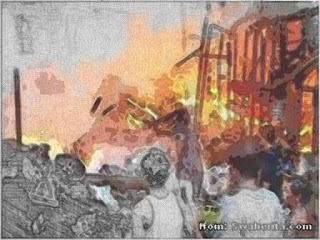
The similar incident happened again in Jayakarta Station on January 6, 2011, but this time the fire which was suspected caused by electric short circuit burnt down 30 kiosks illegally installed under the railway fly-over connecting City (Kota) Station to Manggarai. 

The KAI officials quickly announced that KAI did not suffer from any significant damage but communication cables. As a result, scores of train schedules were beyond controlled, causing thousands of passengers stranded in many stations. But those are only the losses which are noticeable, excluded the possibility of the weakening of the structure of concrete block by the fire which might shorten the life-span of the fly-over.

Now a big question arises! Who allows those people to build their kiosks under the fly-over, upon which the double track rails were constructed? As stated in the law related to train and its railways, the space above and below the fly-over must be free from any building and public activities.

Based on the law, all the kiosks constructed below the fly-over are illegal. But so far the owners have worked and operated freely without caring about the public complaints. Some KAI officials said they could not understand why the kiosks were constructed there though forbidden by the law. So, then, who is responsible for this mess? Are they KAI management, Ministry of Transportation and Communication or city government?


We must also remember that many illegal shelters have been built nearby the railway tracts. And worse come worse as there are informal markets in operation right within the tracts close by the Djuanda, Jayakarta and Cawang stations,  just to mention a few.

There was planning that the KAI management in cooperation with City Government will clear up the shelters along the railway tracts. It is hoped that the plan will be seriously executed.

Logically the presence of the kiosks, shelters and informal markets under the fly-over, nearby or right within the railway tracts must have the blessing from the officials. But when the fire razed the area no one dared to make a clear statement about the legal violation and why there was no certain measure was taken against those kiosk owners who had violated the law indiscriminately.

Or do the people including high ranking officials think that public properties are not worth to be secured? Do we easily forget similar big fire incidents happened not long time ago which burnt the fly-over in Jembata Tiga on October 6, 2008,  the Kampung Melayu fly-over on July 31, 2010, and Musi Bridge on October 13, 2010, which cost billions of rupiah losses?

Just recently, the government has decided to postpone the train tariff increase asking the KAI management to first improve their minimum service condition that they should provide. This decision definitely weakens the capability of the KAI to provide better service as they are now in big deficit to operate their armada. To be just and sustainable, the direct users should somehow bear part of the additional cost and if it considered as unpopular, the government should be fair and realistic by providing the additional financial budget to compensate such deficit. But this means that everybody, including those remote to the infrastructure, must bear the cost.

Now somebody certainly should care about the security of this public infrastructure. Or should it be declared as a vital and strategic national object deserving the same treatment as other "obvitnas"? Nobody wants the lessons are never learned.

Tuesday, January 4, 2011

Jakarta Welcomes 2011

On Saturday, January 1st at 00.00 pm most of Jakarta sky was lighted by colorful fireworks. New Year's Eve in Jakarta and surrounding areas, especially in the most visited areas such as Ancol tourism beach, National Monument (Monas), Roundabout Hotel Indonesia and Miniature Indonesia Park (TMII) were safe and conducive. Since Friday evening those sites were packed with Jakarta residents who wanted to celebrate New Year with fireworks and trumpets.


At that night,  the Jakarta metropolitan police secured around 1000 locations, especially churches, mosques, hotels, shopping centers and entertainment venues in Jakarta and surrounding areas. The metropolitan police have placed 7000 personnel to maintain security throughout the city, and 400 of them guarded the recreation areas.

The number of accidents that occurred in the capital and surrounding areas during New Year’s Eve was hundreds, most of them were motorcycle victims.  At least 30 people were killed and more than 70 seriously injured increased about 30 percent over normal days.

Approximately 450,000 people were out of home celebrating the New Year's Eve, more than half of it concentrated in the Ancol area, and the remaining invaded the National Monument Park (Monas) and Taman Mini Indonesia Indah (TMII). They came from all over the Jakarta and surrounding areas, carrying trumpets and fireworks. Outside those sites, on the main roads, the traffic jammed while most of the roadsides were flocked with sidewalk traders.


Residents enjoyed the atmosphere of New Year’s Eve. Fireworks sparked made the Jakarta sky bright and vibrant and the citizens were excited to welcome the New Year 2011. In some hotels, the New Year was celebrated with the appearance of various attractions, music concerts and the performance of several talented young singers.

In addition to those festive parties, Jakarta as the capital of the biggest Moslem country also conducted spiritual ceremonies in celebrating the New Year through a recitation of Koran verses in several places, among other, at Istiqlal Grand Mosque.

Best wishes for a Happy New Year!