trafic jam

Showing posts with label city government. Show all posts

Wednesday, April 11, 2012

Revitalization of Old Buildings in the Old City Areas

Jakarta is a dynamic city and shows its ever-increasing development. However, latent problems caused by traffic jam, floods and sidewalk traders seemingly to persist. On top of tackling those problems, the city government has a plan to promote the old area to become a tourist destination but only partially successful.


The old city which becomes the target of those promotions covering parts of North and West Jakarta. The old buildings inside the area have been treated as persevered monuments and any renovation of them must receive a special permit from local government to preserve the architecture of the buildings. 


What happens is that the owners of the buildings don’t have the same spirit as the city government to promote the area. Most of the owners cannot properly make use of the buildings considering their strategic location. They even neglect the maintenance of the buildings letting them untouched as such that give a shabby impression.

It seems that the owners do not even have the attention to painting the walls of their buildings and the city government never calls for them to do so. This is very disappointing considering that even in the relatively poor areas such as in the regencies and villages outside Jakarta the authorities used to ask their communities to paint the walls of their homes, for example, in the occasion of celebrating the Independence Day.
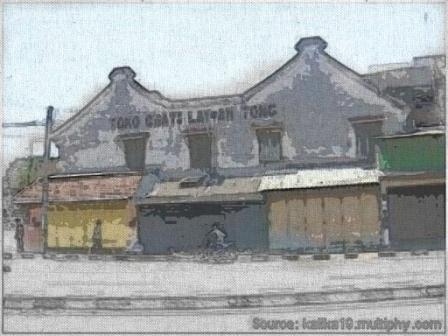

Special attention has to be given to the old dwellings of two-story houses which the second floor used as family living rooms and the first one as a store. The merchandise or food sales sometimes are equal to what street vendors have. Such a condition certainly tarnishes the city appearance which is contrary to the city planners.  

A big question is naturally raised. How come that the owners of the shops and the unmaintained old buildings could pay an exorbitant land and building tax (PBB) where the price of land is more than Rp 20 million (around US$2000) per square meter? The fact that many owners have moved to real estates in the skirt of Jakarta and don’t properly pay taxes for their old negligent properties. 


The city government should be more rigorous to impose the city residents to fulfill their obligations. The owners should be obedient to pay tax according to the high value of their properties amid their bad appearance. For those who want to maintain their properties within such areas, should renovate their buildings and pay the tax.

For those who are unable or do not want to pay the cumulative unpaid taxes for years should release their properties to the third parties or the city government if they are interested. The buildings could be renovated or demolished to widen the roads or to build open areas or recreation centers.

Under such determination, it is hoped that the city government could implement their plan to make the old city center become a tourist destination.

Tuesday, February 14, 2012

Don't Forget to Remember Pedestrians

Jakarta Metropolitan is not for pedestrians. Certainly, Jakarta has not been designed for it. The city seems to be prioritized for the cars’ mobility. No comfortable sidewalks are available nor zebra-crosses are enough for people to stroll around enjoying the metropolitan life. 

The condition of pedestrian access is poor not only in the periphery of the city but also in business, shopping, tourist and office areas where many people used to circulate carrying out their routine activities. 

The pedestrians would be pleased if the sidewalks are free from obstacles such as sidewalk traders and parking vehicles. Ideally, the width of the sidewalks at the protocol road is 5 meters and non-protocol roads 3 meters, but they would be more than happy if they can stride on good sidewalks even though they are narrower. 


The city government seems to be indifferent by the misuse of the sidewalks. The city government may claim that they have modern management but fail to recognize the basic problem of the city. Permissiveness for people not to observe discipline, cleanliness, and tidiness under the reason of poverty is the source of the problem not only in Jakarta but nationwide. 

On the strategic spots, many sidewalks are occupied by traders, some of whom have semi-permanent stalls on them. Many parking-men are careless about the interest of the pedestrians and just let the vehicles park on the sidewalks hindering the pedestrians to easily pass along the sidewalks. 

In order to beautify and make the city become greener, the city government allows some flower cultivators to display their ornamental plants on the sidewalks which in many cases take the whole sidewalks area leaving out little or no space for pedestrians. 

Recently city officials start to recognize that most of the sidewalks in Jakarta are in poor condition. Some are heavily damaged, some are too small, and others are almost at the same height as the road level making the motorcycle drivers who are trapped in a traffic jam can easily run over the sidewalks endangering pedestrians. 

Realizing the previous negligence, the city government today is trying to improve at least 13 sidewalks and make them exemplary models mainly in Central Jakarta. In addition, regular patrol to drive out the sidewalk traders and demolish their illegal stalls, if any, or other obstacles for pedestrians will be carried out regularly. 

Jakarta City Government should not be hesitated to make a comparative study to Surabaya. The Surabaya mayor has renewed water channel and at the same time improved the sidewalks above it. All activities on the sidewalks which have nothing to do with pedestrians are reduced and prohibited. The sidewalk traders are given special places for them to sell their merchandise and staple diet. 

Some of the sidewalks were paved with marble stone blocks to beautify the sidewalks.  Several statues and art ornaments are erected in some sidewalks making people feel comfortable to stroll. In the meantime, city police and officials regularly patrol around the city to make sure that either traders, parking-men or homeless families make use of the sidewalks for their own needs. 

One of the advantages that Surabaya gains in improving the management of sidewalks are because the current city mayor was formerly the chairman of City Park and therefore she knows well all about the problems related to the sidewalks. 

But above all, in order to manage the city properly, the city government should change their mindset that the discipline should be held and strictly imposed on their residents. Orders, cleanliness and tidiness are everybody’s duty to keep for the benefit of all people anywhere and any time.

Wednesday, January 12, 2011

Jakarta Busway: A Success Story?

The turn of the year was marked by the opening of two busway corridors extending the coverage of the city transport to the southeast-northwest Jakarta corners and the south-north axis of the eastern parts of Jakarta.

This event was relatively significant as the operation of these corridors (9 and 10) make the Jakarta citizens easily move around the city only with Rp3,500 (40 cents US$) through the connection with the existing busway networks. The passengers can even spend less (Rp2,000) as long as they travel before 07.00 am.

The idea to operate busway was initiated in 1997 inspired by Bogota busway in Colombia as an exemplary model. In this system, the bus was given an exclusive lane on the roads that are part of the busway route. Transjakarta started operations in the early of 2004 to provide faster, convenient, yet affordable transportation means for the Jakarta citizens.

There were skeptical attitude and opposition against the introduction of busway as an alternative public transport in Jakarta. A new idea always gets opposition from a part of the society especially those who are skeptical. You may remember how the similar skeptical attitude rose when the police department issued the rule mandating motorcyclists to wear helmets in the early 1980s. Kompas described the people discontentment against such rule through a caricature depicting a motorcyclist bearing a rice basket upside down on his head in order to observe the rule.

But the reluctance toward the introduction of busway was not without reason. Most of Jakarta roads are narrow clogged with cars and would be even worse if they are reduced by the busway lanes. Actually, there are several problems the operators have to solve, among others the lack of buses during the peak hours, lack of AC in some bus shelters, CNG usage as busway fuel, and the external problem such as private cars flocking the lanes.

There are a total of 97 kilometers of busway lanes and 120 bus shelters built along the lanes. As many as 270 single and 16 double-buses are in operation carrying around 250,000 passengers daily. From those figures, some of them are from motorcyclists and car owners who regularly shift using the busway keeping their vehicles at home.


With the aim to improve the service and to cut down the subsidy, in 2007 the city government, supported by local House members, planned to double the tariff to Rp 7,000. The plan was dropped as some NGOs were sternly against it. This certainly burdens the city budget and reducing the city capability to construct the remaining 5 corridors as it was planned. 


The planned tariff hike could be too high, and to avoid the turmoil the increase should be implemented in a gradual way. And to reduce the burden of frequent passengers, the city should issue busway subscription cards with reasonably lower rates. 

But one is for certain; the sustainability of the busway operation should be maintained. The city should provide sufficient funds for the operation and maintenance by balancing the rate of the tariffs with the financial capability of the city government to provide subsidies. 

And last but not least, the management should pay enough attention to the welfare of the drivers and related workers so they would have a sense of belonging and are proud of their profession. It is so simple and easy to say but in reality, it requires a strong political will and a lot of support from all stakeholders to execute such things in a realistic way.

Despite many criticisms and the inconvenience of the private vehicles due to the operation of this busway, from the point of view of the passengers, they feel quite
comfortable because of a cheaper tariff, more efficient and less frustrated due to the avoidance of traffic congestion. Hopefully, Transjakarta will meet the expectations to become a public transportation means, which is integrated, comfortable, well managed and become a good long term solution for managing Jakarta traffic congestion.